
Beauty is sold as empowerment, yet the commodification of the female body functions as a system of social control that constrains women’s agency and self-actualisation. Best in Show is a practice-led, autoethnographic investigation that interrogates this paradox through contemporary painting.
By situating the studio process as a form of critical inquiry, the project examines how the aesthetic language of beauty can be reappropriated, exaggerated and disrupted to expose its disciplinary power and psychological effects.
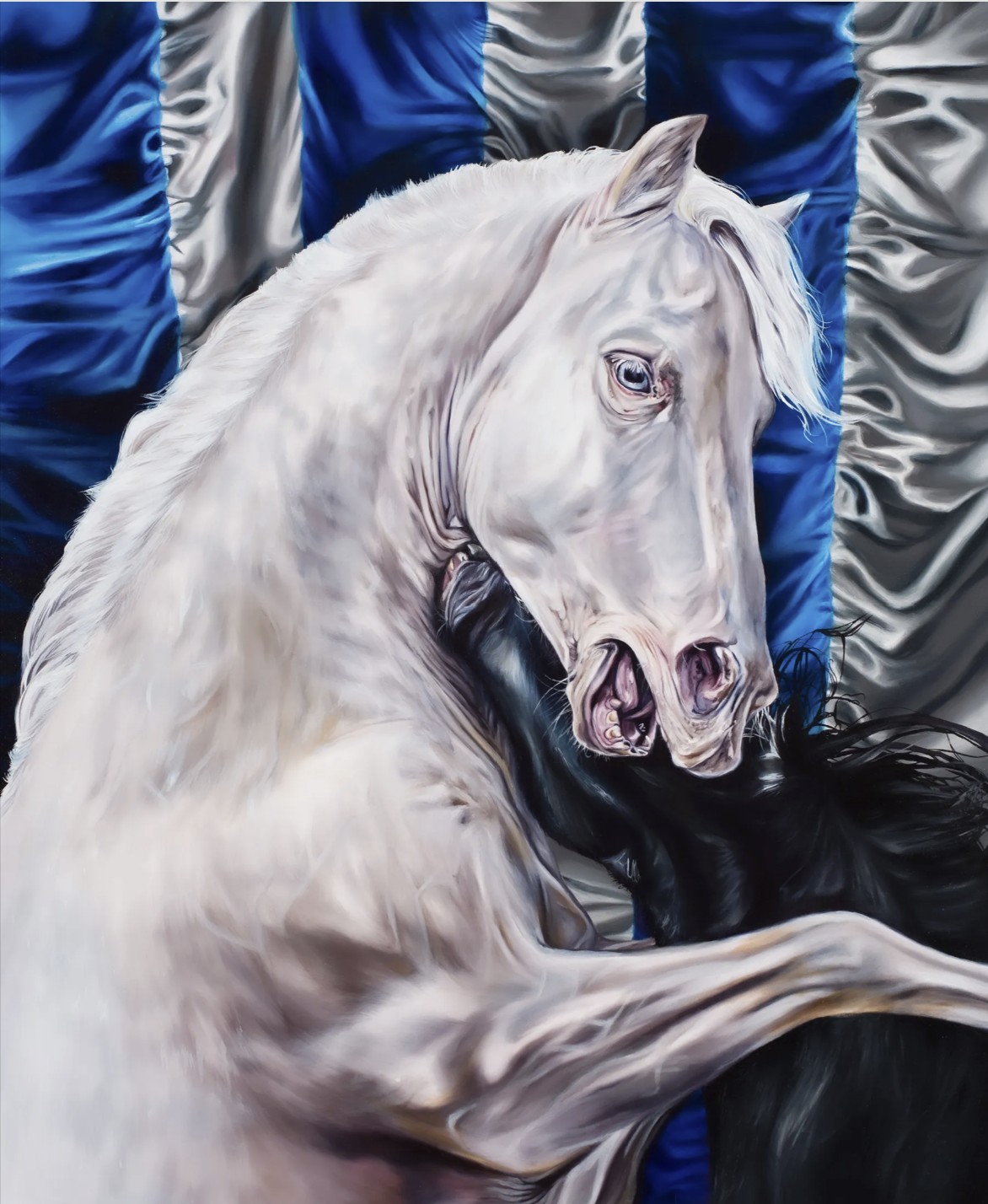
Oil on canvas
92 × 76 cm
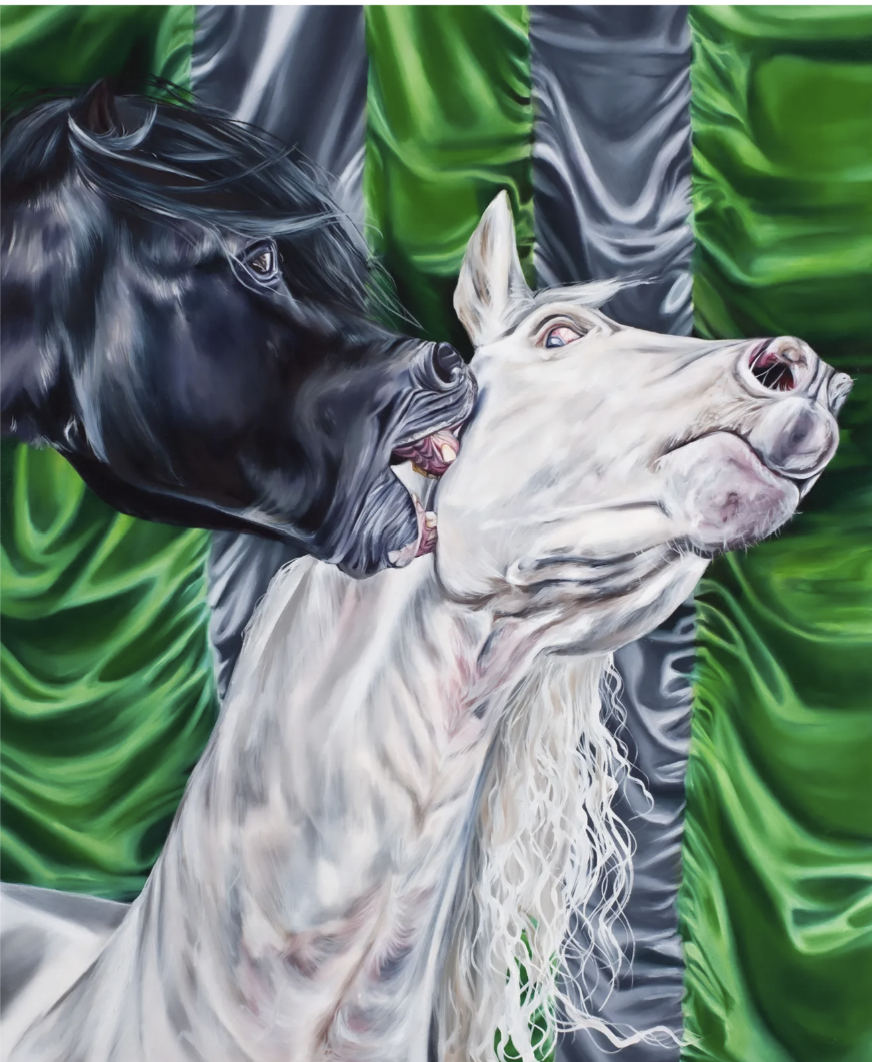
Oil on canvas
92 × 76 cm
For me, horses embody a personal fascination. I rode them as a girl, enchanted by their elegance and strength as symbols of girlhood freedom and care. Yet their symbolism is contradictory: horses have historically also been harnessed for war, labour and patriarchal power.
Here, horses become metaphors for the human body and the performance of femininity. Their muscular forms recoil, strain and collide, entangled in cycles of conflict and submission while simultaneously struggling for dominance and approval. These interactions reflect both complicity and resistance.
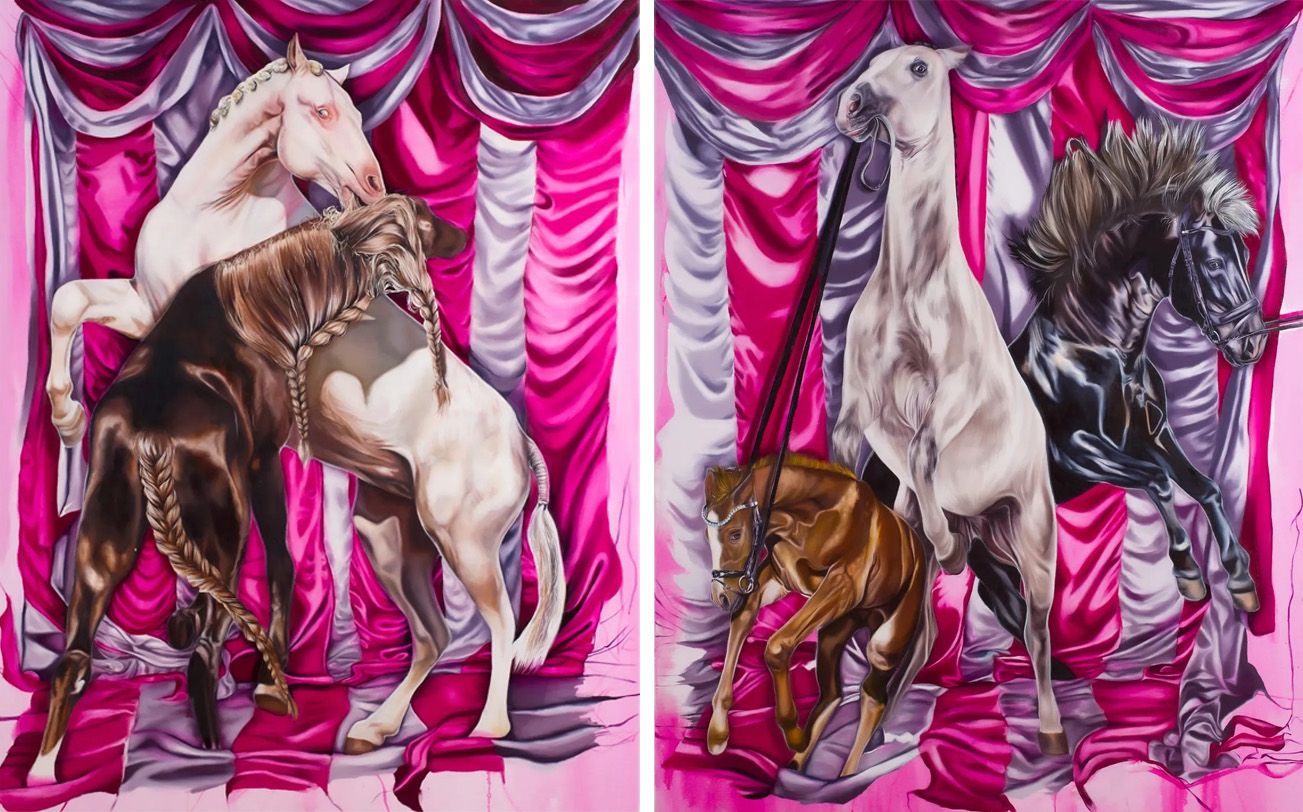
Colour, composition and atmosphere become mechanisms through which these ideas are communicated. The electric pink curtain is simultaneously seductive and satirical, referencing the infantilisation and commodification of beauty under capitalism.
The carnivalesque, with its grotesque exaggeration and inversion of order, destabilises aesthetic and social hierarchies. Rococo excess is similarly reimagined as a vehicle for feminist critique; its ornament and theatricality become a lens through which to question the cultural and emotional economies of prettiness.
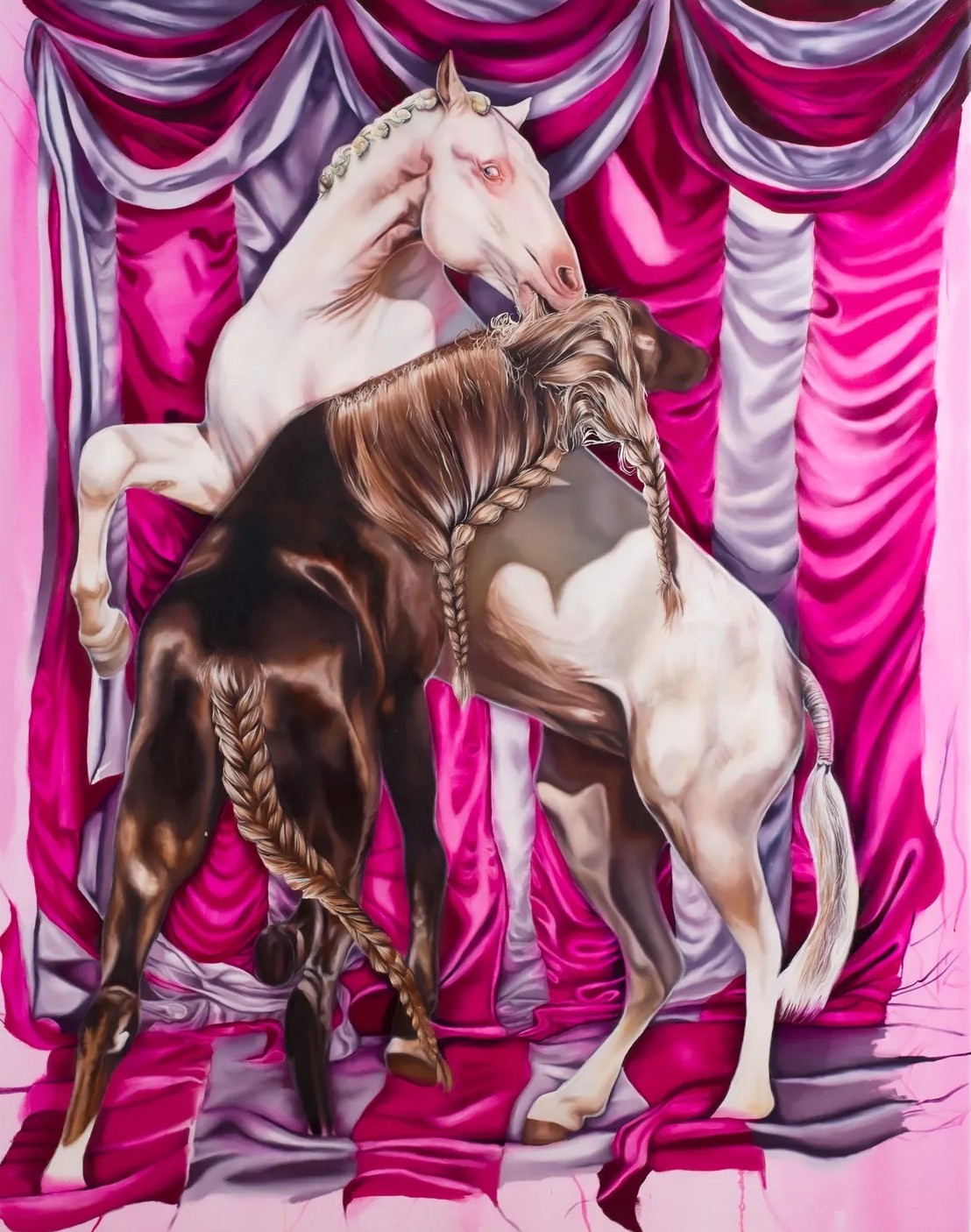
Oil on canvas
150 × 200 cm
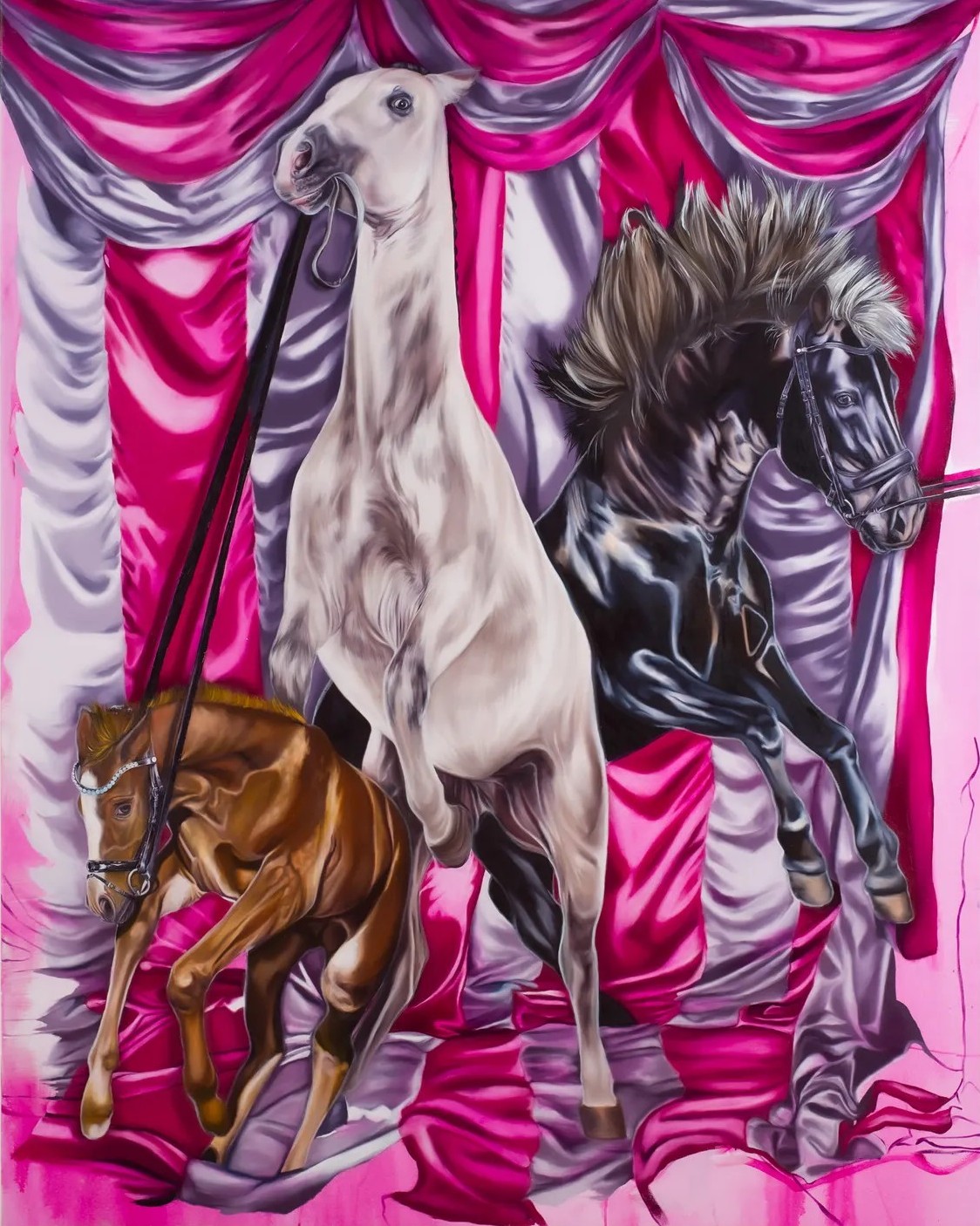
Oil on canvas
150 × 200 cm
The horses’ gestures mirror personal encounters with these systems. Two horses caught mid-tussle speak to complicity in perpetuating the gaze; a foal jolted upwards by an older mare visualises the shock of womanhood and the inheritance of feminine performance, while another horse tugged offstage by an unseen force suggests the invisible systems that regulate self-presentation.
Through this interplay of seductive surface and psychic strain, Best in Show visualises the contradictions inherent in the pursuit of perfection, revealing how the spectacle of beauty demands performance, comparison and self-surveillance.
Through this reflexive dialogue between theory, material and self, the studio becomes a place to train and untrain: to acquire skills in painting and research while decentring appearance from self-worth.